Faktowo
Three new snake species from Ecuador. One was found in a cemetery
A team led by Alejandro Arteaga has found three previously unknown snake species in Ecuador. One of them was discovered among gravestones in a cemetery in the town of Amaluza.
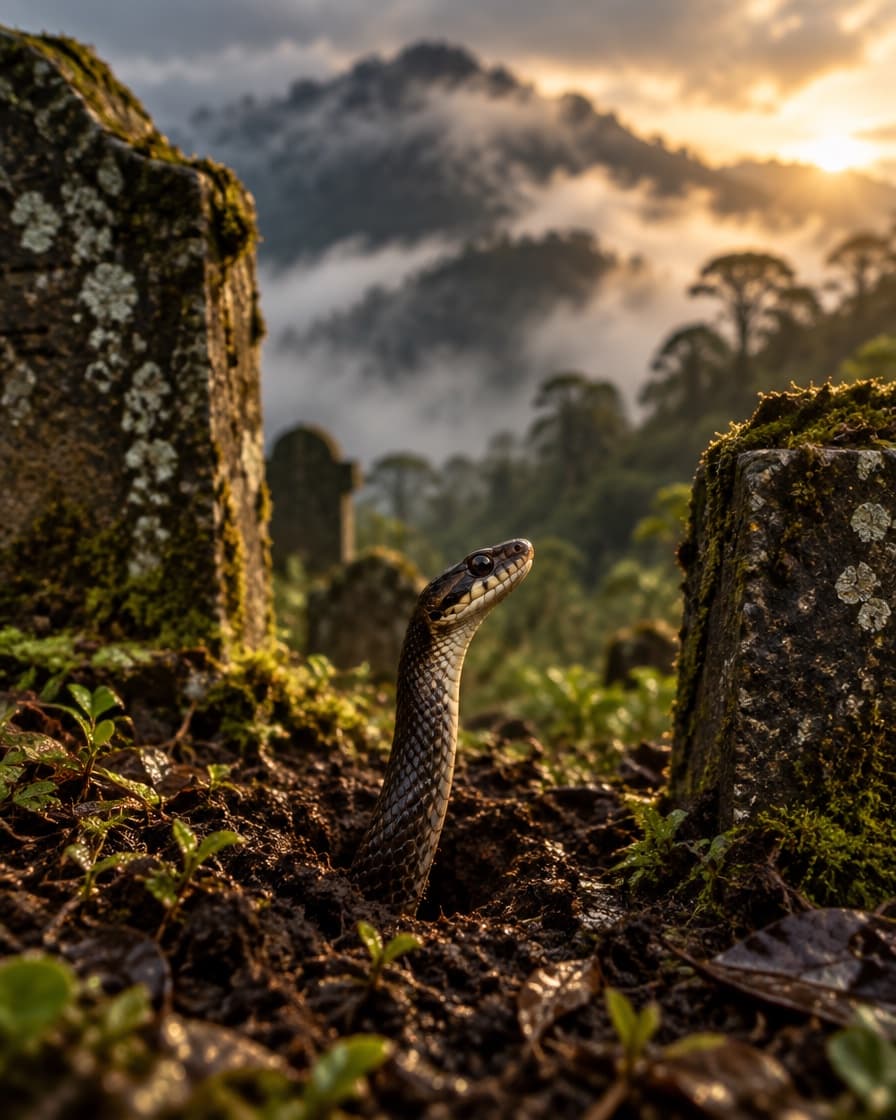 AI image
During a research expedition in southern Ecuador, a team of scientists came across three previously unknown snake species. The work was led by Alejandro Arteaga, and the expedition took place as part of the “The Explorers Club Discovery Expeditions” programme. The discovery was reported by the RMF24 website.
All three species belong to the genus Atractus. According to RMF24, one of them, Atractus discovery, was found among gravestones in a cemetery in the town of Amaluza. The other two, Atractus zgap and Atractus michaelsabini, were found behind an old church and in the building of a local school, respectively.
Elusive reptiles from underground
Snakes of the genus Atractus are small, burrowing reptiles that are exceptionally hard to spot. They live mainly in the humid mountain cloud forests of Central and South America. Nearly 4,000 snake species live in the world.
According to the author of the RMF24 article, most of these snakes' natural habitats have been destroyed: forests have been turned into farmland and wetlands have been drained. Forced to look for new hiding places, the animals increasingly settle in places abandoned by people, such as old buildings and cemeteries. This is the author's general comment – it is not known whether the researchers demonstrated such a link for these three species.
Where the names come from
Under the rules of zoological nomenclature, a new species is officially recognised once it has been described in a scientific publication that gives it a name.
According to RMF24, the name Atractus discovery commemorates the research programme, and Atractus zgap refers to a nature conservation initiative. Atractus michaelsabini was named in honour of Michael Sabin, grandson of a well-known philanthropist who supports environmental work.
What is not known
RMF24 does not give the scientific publication in which the species were described, the date of the expedition, the number of specimens found, the appearance of the species, the meaning of the name “zgap”, or the identity of the philanthropist mentioned. The website calls these snakes endangered reptiles, but does not state their conservation status or population size.
Why it matters
According to RMF24, all three species were found in places linked to human presence: in a cemetery, behind an old church and in a school building.
- Źródło: RMF24 Nauka, Odkrycie na cmentarzu. Naukowcy znaleźli trzy nowe gatunki węży, http://www.rmf24.pl/fakty/nauka/news-odkrycie-na-cmentarzu-naukowcy-znalezli-trzy-nowe-gatunki-we,nIdn,1019088
Put your brand inside a fact people save and share. Reach, examples and terms are on faktowo.partners.
Become a partner →