Faktowo
Nerve-to-muscle communication fails with age – which may help explain loss of strength
Researchers at the University of Missouri: communication between nerves and muscles weakens with age. Partial inhibition of the ClC-1 protein increased strength in an animal model.
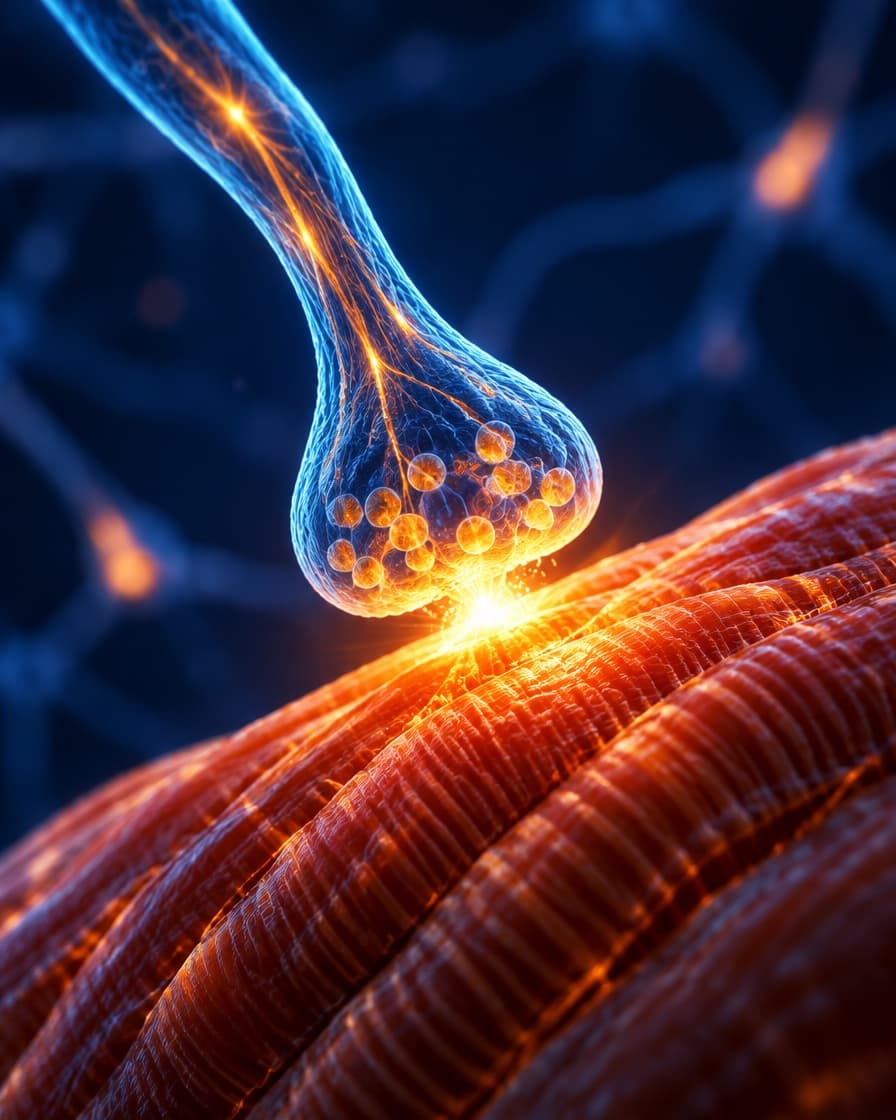 AI image
Communication between nerves and muscles becomes less reliable with age. This is the conclusion reached by a team led by W. David Arnold at the University of Missouri. The work was published in the Journal of Clinical Investigation under the title "Neuromuscular junction failure in sarcopenia is linked to NaV1.4 loss and reversed by ClC-1 inhibition".
According to the researchers, this failure probably contributes to sarcopenia. This is an age-related decline in muscle strength and function, which affects nearly half of adults over the age of 80.
Contrary to previous assumptions
The field has long assumed that the neuromuscular junction remains reliable in ageing. Some even suggested that it might improve. The junction is the place where a neuron passes a signal to a muscle to contract.
Arnold says the new study shows the opposite. He says the junction fails with age in both humans and animal models.
The researchers linked the problem to a lower level of the NaV1.4 protein. It helps muscle fibres respond to signals from nerves. Like ClC-1, this protein is an ion channel in the membrane of the muscle fibre and helps determine its excitability.
An attempt at a fix: inhibiting ClC-1
In collaboration with the Danish biotechnology company NMD Pharma, the team partially inhibited the ClC-1 protein. According to the authors, this made ageing muscles more sensitive to nerve signals, and their strength increased in an animal model.
The approach does not involve replacing lost muscles or neurons. The aim is for existing muscle fibres to respond more strongly to the signals that reach them.
Arnold was an investigator in a multicentre clinical trial of ignaseklant, an experimental drug from NMD Pharma that partially inhibits ClC-1. The trial involved patients with Charcot-Marie-Tooth disease. It reported improvement in several measures of muscle strength and physical function, and preliminary results were presented at the Muscular Dystrophy Association conference in 2026.
What is still not known
Clinical studies so far on targeting ClC-1 have concerned neuromuscular conditions other than sarcopenia. The therapy has not yet been tested in older people with sarcopenia.
It was not stated how large the improvement in strength was in the animal model, or which animal species was used. It is also not known how many people, and of what age, the observations of junction failure concerned. The results of the ignaseklant trial were presented only preliminarily and in general terms.
The information comes from the university's press release, and the authors are collaborating with the company developing the drug. Arnold's team is international: researchers from Denmark, Scotland, Saudi Arabia and India work with it.
Why it matters
If the results are confirmed, loss of strength in old age could be explained not only by wasting of the muscles themselves, but also by weakening communication between nerves and muscles. For now, however, this is only an early stage of research, and the effectiveness of the approach described in older people remains untested.
- Źródło: ScienceDaily (Health), Aging muscles may be losing strength for a reason scientists missed, https://www.sciencedaily.com/releases/2026/09/260923035924.htm
- Journal of Clinical Investigation, 2026, tom 136, nr 17, DOI: 10.1172/JCI190646
Put your brand inside a fact people save and share. Reach, examples and terms are on faktowo.partners.
Become a partner →